
Nov 9, 2025 | Health & Care
Separation anxiety in dogs – understanding, signs, and how to help your dog cope
Separation anxiety in dogs is one of the most common — and most emotional — challenges dog owners face. When a dog cries, barks, scratches the door, or destroys furniture every time you leave, it’s not because he’s spoiled or stubborn. It’s panic.
A dog who can’t see, hear, or smell you loses his sense of safety — and that triggers a strong stress response.
For many dogs, your departure feels like their world suddenly collapses. They hear the door close, then silence. Since dogs don’t understand the concept of time, they can’t reason that you’ll “be back in a few hours.” To them, you’ve simply disappeared. Understanding separation anxiety in dogs is the first and most important step in helping them breathe calmly again.
What separation anxiety in dogs really means
Separation anxiety is, at its core, the fear of being alone. A dog doesn’t perceive time the way humans do, so your absence feels like an indefinite loss. His body reacts as if facing danger: cortisol levels rise, the heart races, breathing becomes shallow, and muscles tense up.
Some dogs bark or whine; others chew or scratch doors. Many destroy objects not out of defiance, but because chewing or moving helps release built-up tension. Some dogs simply freeze or hide in fear. All these reactions come from the same place — a desperate fear of being left alone.
This problem often appears after major life changes — moving homes, losing a companion, schedule changes, or after long periods of constant togetherness (such as vacations or working from home). It’s important to understand that it’s not a behavioral flaw, but an emotional and physiological reaction that can be gently reduced with the right approach.
Why separation anxiety develops
The root of the problem is the dog’s sense of security. A confident dog knows that his world is predictable — his human always returns, and routine provides stability. When that feeling is missing, panic sets in.
The cause often lies in early development. Puppies separated too soon from their mother or siblings are more vulnerable. Shelter dogs or rescues that have lost previous owners can also develop a deep fear of abandonment.
Even small, well-intentioned habits can reinforce anxiety — dramatic goodbyes (“Be good, I’ll be right back!”), rushing home because you feel guilty, or never giving your dog a chance to be alone calmly.
How to help a dog with separation anxiety
The foundation of progress is calm, consistency, and gradual training. The goal is to teach your dog that being alone is safe, predictable, and temporary.
1. Establish a predictable routine.
Dogs thrive on structure. Keep daily activities in a similar rhythm — morning walk, feeding, calm time, your departure, your return. Predictability lowers stress and helps the dog anticipate what comes next.
2. Teach relaxation.
Before working on independence, your dog must first learn how to settle down when you’re home. Practice relaxed lying on a bed, reinforce the “place” cue, and reward calmness. Over time, your dog will associate your calm energy with his own peace.
3. Gradual desensitization.
Start with very short absences — step out for a few seconds, then return before your dog becomes anxious. Gradually extend the time. The key is for your dog to experience success — to realize you always return and that being alone isn’t scary.
4. Create a safe space.
Provide a cozy spot — a bed, crate, or corner that feels secure. Leave an item with your scent or a favorite toy. A familiar smell often helps soothe a worried mind.
Common mistakes when dealing with separation anxiety
When facing a problem, most owners understandably want quick results. But rushing the process usually backfires. Many people try to “toughen up” the dog — leaving him alone for longer and longer periods, expecting he’ll eventually get used to it. In reality, this approach deepens the fear.
When you return, you may find chaos — torn cushions, scratched doors, a trembling dog. He didn’t “misbehave”; he panicked.
Another frequent mistake is punishment after the fact. People think the dog “knows what he did,” but he doesn’t connect the punishment with his past actions. He connects it with your return. This only increases anxiety the next time you leave.
The opposite extreme — over-comforting the dog every time you come home — also fuels the problem. When your return is a huge emotional event, the dog learns that your absence is something terrible. Instead, walk in calmly, ignore the excitement for a few minutes, then greet him warmly when he’s relaxed.
Finally, owners often forget the importance of physical and mental stimulation. A tired, satisfied dog is far less likely to feel anxious. Regular walks, sniffing games, puzzle toys, and short training sessions help release energy and stabilize emotions.
A real-life example
Luna, a young mixed-breed, spent the summer with her family on vacation — always surrounded by people. When the owners returned to work, Luna started barking and scratching the door as soon as they left. At first, they thought she’d “get over it.” Instead, it got worse.
Two weeks later, they introduced structure: morning exercise, calm feeding, relaxation training, and gradual departures — from one minute to five, then fifteen. Within a few weeks, Luna could calmly nap alone for half an hour. Today she quietly watches the door when she hears the keys, then curls up in her bed.
Stories like this show that with patience, understanding, and gentle consistency, even severe separation anxiety in dogs can be overcome.
Summary
Separation anxiety in dogs is not misbehavior — it’s a call for safety. A dog who cries for you doesn’t need punishment; he needs trust. Teach him that the world remains safe even when you’re not home. Give him clarity, predictability, and peace — and he will give you confidence and calm in return.
With patience and a kind approach, fear can transform into trust — and that’s the greatest gift you can give your dog.

Oct 23, 2025 | Training
5th Fundamental rule in dog training: Emotional connection – The foundation of trust and safety
More Than Commands – Training That Begins with the Heart
Dog training isn’t just about teaching commands or correcting behavior.
At its core, it’s about relationship.
The emotional connection between human and dog is the foundation upon which everything else stands — cooperation, understanding, and trust.
Without that connection, commands lose their depth.
A dog may understand what you want, but not why it should matter.
When the bond is strong, every cue carries meaning. The dog doesn’t respond out of fear or habit — it responds out of trust and desire to be part of your world.
And that’s where true training begins.
What Emotional Connection Really Means
Emotional connection is built on trust, respect, and consistency.
It’s that quiet certainty your dog feels when it looks at you and knows it’s safe.
This isn’t about dominance or obedience — it’s about calm assurance and mutual understanding.
Connection can’t be forced or bought with treats.
It’s something that grows over time, through shared moments and mutual attention.
Each gentle touch, each moment of patience, each time you read your dog’s signals instead of correcting them — all of these are small investments in a much larger bond.
When your dog feels understood, it begins to seek connection on its own.
At that moment, training stops being a routine and becomes a real dialogue.

How Connection Appears in Everyday Life
A connected dog doesn’t look to you only when it wants food or fun.
It looks to you because you are its point of safety.
When you enter an unfamiliar place together, your dog doesn’t panic or pull away — it glances at you for reassurance.
If something startles it, it turns toward you instead of fleeing.
In your voice, it finds calm. In your presence, it finds balance.
A dog that trusts you learns faster, handles stress better, and recovers from fear more easily.
Your cues become more than words — they become guidance.
That’s why connection is the invisible bridge between communication and cooperation.
Building Blocks of Emotional Connection
Every strong bond is built on daily choices.
You don’t need perfection; you need presence.
🕰️ Quality Time
The most precious gift you can offer your dog is your attention.
Not distracted, half-hearted attention — but quiet, focused time.
Walks, gentle play, or simply resting together strengthen the sense of belonging.
Those small, peaceful moments weave the invisible thread of trust.
👀 Understanding Canine Language
Your dog is always communicating, even in silence.
Its tail, eyes, posture, and breathing tell a story.
Learning to read those signals allows you to respond with empathy instead of confusion.
When your dog sees that you “get it,” anxiety fades and learning becomes easier.
🧡 Connection Without Expectation
Sometimes the best thing you can do is just be there.
No commands, no training, no goals.
Just sit together, let your dog lean against you, and breathe the same rhythm.
Those moments say more than words ever could.
💬 Empathy
Not every day will be perfect.
Sometimes your dog won’t have the courage or energy to do what you ask.
That doesn’t mean stubbornness — it means struggle.
Empathy lets you see beyond behavior and recognize emotion.
When you respond with patience, your dog learns that your presence means safety, not pressure.
⚖️ Stability
Predictability is peace.
When daily life follows a gentle rhythm — when your tone is calm and your reactions consistent — your dog relaxes.
Stability doesn’t mean rigidity. It means your dog can rely on you no matter what the day brings.
And in that stability, connection deepens.
When Connection Is Missing
Many behavioral problems start where emotional safety ends.
A dog that doesn’t feel secure will struggle to learn, to stay calm, or to be alone.
It may seem stubborn, but often it’s simply uncertain.
Disconnection rarely happens overnight.
It grows through moments of frustration, neglect, or misunderstanding.
Fortunately, it can also heal the same way — slowly, through consistent kindness.
Every gentle glance, every minute of quiet presence, every soft word helps rebuild trust.
Rebuilding Trust
If your bond feels weaker than before, don’t lose hope.
Every relationship — even with a dog — goes through changes.
Start small.
Be there when your dog hesitates. Let it observe, approach, and rediscover you.
Trust isn’t demanded; it’s earned.
When your dog realizes that you listen, that you protect rather than punish, it will make that small but powerful choice: it will come closer.
And when it does, you’ll know — connection is returning.
Closing Thoughts
Emotional connection isn’t something that comes after obedience — it’s what makes obedience possible.
It’s the invisible thread that ties together the other four rules: consistency, patience, clear communication, and motivation.
When your dog trusts you, learning feels effortless.
When it feels safe, cooperation becomes natural.
When it feels understood, it becomes your willing partner.
Training doesn’t begin with a command.
It begins with a relationship.
Everything else follows — naturally, calmly, and with heart.
🔗 Related Articles
Oct 23, 2025 | Training
Več kot ukazi – vzgoja, ki se začne s srcem
Vzgoja psa ni le niz vaj, pravil in ukazov.
V svojem bistvu je nekaj veliko globljega – je odnos, ki povezuje dva različna sveta.
Čustvena povezanost med človekom in psom je temelj, na katerem stoji vse ostalo: sodelovanje, razumevanje in zaupanje.
Brez nje ukazi izgubijo pomen. Pes bo morda razumel, kaj želimo, ne pa tudi, zakaj to želi početi z nami.
Ko pa med vama obstaja vez, vsaka vaja dobi drugačno težo. Pes ne sodeluje zato, ker mora, temveč zato, ker želi biti del tvojega sveta.
In prav v tem se skriva srčika uspešne vzgoje.
Čustvena povezanost je eno izmed petih temeljnih pravil sodobne vzgoje psa. Skupaj z doslednostjo, potrpežljivostjo, jasno komunikacijo in motivacijo tvori celoto, ki jo podrobneje razlagam v članku 5 temeljnih pravil za uspešno vzgojo psa.
Kaj pomeni čustvena povezanost s psom
Ko govorimo o čustveni povezanosti, govorimo o zaupanju.
O tisti tihi gotovosti, ki jo pes občuti, ko te pogleda in ve, da je ob tebi varen.
Ne gre za podrejenost ali za popolno poslušnost, temveč za občutek miru, ki ga prinese tvoja prisotnost.
Povezanost se ne gradi s treningi in ukazi, temveč s časom.
Z vsakodnevno prisotnostjo, z nežnim dotikom, s spoštovanjem njegovega tempa in z razumevanjem njegovega jezika.
Pes, ki čuti, da ga razumeš, bo začel iskati stik sam od sebe.
In ko se to zgodi, trening ni več vaja, ampak pogovor.
Kako se povezanost kaže v vsakdanjem življenju
Pes, ki ti zaupa, te ne išče samo, ko ima prazen želodec ali ko želi igro.
Išče te, ker se ob tebi počuti varnega.
Ko vstopita v neznano okolje, se ne izgubi v zmedi, ampak poišče tvoj pogled.
Ko ga nekaj prestraši, ne pobegne, temveč se obrne proti tebi.
V tvojih očeh najde odgovor, v tvojem glasu mir, v tvojem vedenju smer.
Tak pes se lažje uči, hitreje umiri in bolje prenaša stres.
Tvoje navodilo zanj ni zahteva, temveč vodilo.
Zato sodeluje tudi, ko nagrade ni. Sodeluje, ker mu sodelovanje nekaj pomeni.
Takšna umirjenost se ne zgodi čez noč, temveč se gradi postopoma. Prav zato ima pri vzgoji pomembno vlogo potrpežljivost, ki psu omogoča, da se uči brez pritiska in strahu.
Gradniki čustvene povezanosti
Kot vsak odnos tudi ta potrebuje čas, nežnost in razumevanje.
Zaupanje ne nastane z enim sprehodom, temveč s tisoč drobnimi trenutki, ki jih pes poveže v občutek varnosti.
🕰️ Skupen čas
Najbolj dragocena stvar, ki jo lahko daš psu, je tvoj čas.
A ne čas, ko telefon zvoni, misli bežijo drugam in koraki hitijo.
Čas, ko si zares tam – prisoten, miren in osredotočen nanj.
Skupni sprehodi, umirjeno ležanje ali igra brez cilja niso “izgubljen čas”.
So trenutki, v katerih se med vama tke tisto nevidno, a močno zaupanje.
👀 Razumevanje pasje govorice
Pes ves čas komunicira, tudi ko molči.
Njegov rep, drža telesa, ušesa, pogled – vse to so besede v njegovem jeziku.
Ko se naučiš jih prepoznati, se začneš odzivati na njegov resnični svet, ne le na vedenje, ki ga vidiš.
Pes, ki vidi, da ga razumeš, se sprosti. In ko se sprosti, se začne učiti.
🧡 Stik brez pričakovanj
Včasih je treba samo biti.
Brez ukazov, brez načrta, brez ciljev.
Le sedeti ob njem, ga božati po prsih in čutiti njegovo dihanje.
V teh trenutkih se tke zaupanje, ki ne potrebuje besed.
💬 Empatija
Niso vsi dnevi enaki – ne za tebe, ne za tvojega psa.
Včasih ne bo zbral poguma, drugič ne bo imel energije ali volje.
V teh trenutkih potrebuje razumevanje, ne popravek.
Empatija pomeni, da vidiš več kot vedenje – vidiš občutek, ki ga povzroča.
⚖️ Stabilnost
Za psa je svet varen, ko je predvidljiv.
Ko se vsak dan odvija približno enako, ko so tvoje reakcije mirne in tvoj glas zanesljiv.
Stabilnost ni togost, ampak občutek stalnosti.
Pes, ki ve, da se tvoja pravila ne spreminjajo z razpoloženjem, se lahko sprosti – in zaupanje se poglobi.
Pravila, ki so mirna in predvidljiva, psu ne omejujejo svobode, temveč mu dajejo občutek varnosti. O tem, kako pomembna je doslednost pri gradnji zaupanja, več izveš v članku Doslednost – temelj zdravega odnosa.
Kaj se zgodi, ko povezanosti ni
Veliko vedenjskih težav se začne tam, kjer zmanjka zaupanja.
Pes, ki se ne počuti varno, bo težko ostal sam doma, se težko zbral med motnjami in se težko učil.
Morda bo deloval trmast, v resnici pa se bo trudil razumeti svet brez občutka varnosti.
Pomembno je vedeti, da se pomanjkanje povezanosti ne pokaže čez noč.
Rodi se v drobnih trenutkih – v ignoriranju, v nepotrpežljivosti, v prehitrih reakcijah.
Toda dobra novica je, da se prav tako postopoma lahko ponovno zgradi.
Vsak prijazen pogled, vsaka skupna minuta in vsaka iskrena gesta štejejo.
Kako ponovno vzpostaviti vez
Če se je zaupanje skrhalo, se ne obtožuj.
Vsak odnos ima vzpone in padce, tudi tisti s psom.
Začni znova – z majhnimi koraki.
Bodi ob njem, ko je negotov.
Dovoli mu, da te opazuje, da te preizkuša, da se spet nauči verjeti.
Zaupanje se ne zahteva, zaupanje se zasluži.
Ko pes spozna, da ga razumeš, da ga ne sodiš in da mu nudiš varnost, bo naredil tisti droben, a odločilen korak – sam bo poiskal tvoj stik.
In ko se to zgodi, veš, da si na pravi poti.
Sklepne misli
Čustvena povezanost ni nekaj, kar pride po tem, ko “pes uboga”.
Je tisto, kar omogoči, da pes želi sodelovati.
Je nevidna nit, ki povezuje vsa ostala pravila – doslednost, potrpežljivost, jasnost in motivacijo.
Ko pes zaupa, učenje postane lahkotno.
Ko se ob tebi počuti varnega, sodelovanje postane samoumevno.
In ko ga spoštuješ kot čuteče bitje, se odnos spremeni v partnerstvo.
Vzgoja psa se nikoli ne začne z ukazom.
Začne se z odnosom.
Vse ostalo pride zatem – naravno, mirno in v svojem tempu.
🔗 Povezani članki

Oct 23, 2025 | Training
4th Fundamental Rule in Dog Training: Motivation – The Driving Force of Learning
Why Motivation Is the Heart of Every Successful Training
Every dog has their own unique set of interests, rewards, and incentives that drive their behavior.
What excites one dog may mean nothing to another. Understanding those differences is what separates good training from great training.
Motivation is the true engine of learning.
If we want our dogs to participate willingly, we must give them a reason to want to.
Dogs don’t work because they “have to” — they work because it makes sense to them, because they find joy and purpose in it.
When we understand that, training stops being a battle and becomes a dialogue — a shared journey where both sides win.
What Motivation Means in Dog Training
In the context of training, motivation means a dog’s internal willingness to participate, learn, and respond.
This willingness is tied to the expectation of a reward — but reward doesn’t always mean food.
For some dogs, the best reward is play.
For others, it’s your voice, touch, or attention.
And for many, it’s the freedom to explore or to engage in natural behaviors like sniffing, running, or socializing.
Motivation is like fuel — if the tank is empty, the engine won’t run.
But if you fill it with the right kind of fuel, your dog becomes eager, focused, and curious.
The right motivation doesn’t just make learning faster; it builds resilience, confidence, and joy in cooperation.
The Many Faces of Motivation
There’s no universal formula for motivation — each dog has their own key.
Your job as a trainer or guardian is to find it.
Food
The most universal form of reward, but not all food has equal value.
Some dogs will work for kibble, while others need something extra — cheese, chicken, sausage.
Food rewards can also be part of their daily meal to prevent overfeeding.
Play
Play is a powerful motivator that taps into instinctive drives.
Tug games, fetch, or hide-and-seek with toys turn learning into fun.
For dogs with strong working or hunting instincts, play can be even more rewarding than food.
Social praise
Your voice, your smile, your touch — for many dogs, this is the ultimate reward.
When they feel your genuine joy, they naturally want to repeat the behavior.
Permission to perform behavior
Your dog sits and waits at the door.
When they do, the door opens.
That moment — gaining access to the environment — becomes the reward.
Environmental motivation
Freedom, exploration, new scents, movement — for many dogs, these experiences are highly reinforcing.
For breeds with high physical or mental energy, environmental rewards are crucial.

Why Training Without Motivation Doesn’t Work
Training without motivation is like trying to learn without interest.
A dog who doesn’t understand why they’re doing something — or who finds no joy in it — will quickly lose focus.
They might obey when you’re standing there, but as soon as the reward or pressure is gone, the behavior fades.
Lack of motivation often leads to frustration, anxiety, or shutdown.
On the other hand, motivation awakens curiosity and strengthens trust.
A motivated dog learns faster, but more importantly, learns with joy.
When a dog trains through play, praise, and success, they don’t just build skills — they build a bond.
They realize that working with you is fun, safe, and rewarding.
That realization is the foundation of a long-term, positive relationship.
How to Discover and Shape Your Dog’s Motivation
Every dog is different.
Some would sell their soul for a piece of cheese, while others don’t care for food at all.
That’s why your first task is to observe, test, and adapt.
Ask yourself: What truly excites my dog?
Experiment with:
-
different foods,
-
toys and games,
-
praise,
-
exploration and freedom.
Create a “motivation scale”:
🔹 For simple behaviors (like “sit”), use lower-value rewards.
🔹 For challenging tasks (like recall around distractions), use the highest-value rewards you can find.
Watch your dog’s body language.
The right reward causes a visible spark — bright eyes, lifted ears, wagging tail, focused attention.
If you don’t see that, change your strategy.
Motivation also changes with time of day, environment, and your dog’s energy level.
Some dogs respond better to food in the morning and to play in the evening.
Pay attention and adapt accordingly.
And don’t forget the so-called “life rewards” — opening a door, being allowed to sniff, or greeting another dog can be powerful motivators if used thoughtfully.
Common Mistakes That Kill Motivation
Even well-meaning owners often weaken motivation without realizing it.
Here are the most frequent pitfalls:
-
Using the same reward over and over
Dogs get bored. Variety keeps engagement high.
-
Poor timing
If the reward comes even a second too late, your dog won’t connect it to the right action.
Reward must happen immediately after the desired behavior.
-
Ignoring individuality
What motivates one dog might bore another.
Your dog isn’t “lazy” — you just haven’t found their language yet.
-
Overreliance on food
Food is a fantastic training tool, but it shouldn’t be the only one.
Gradually shift toward social rewards and intrinsic motivation — the joy of working with you.
Closing Thoughts
Motivation is the heart of positive training — the foundation of trust, cooperation, and joy.
It’s not bribery; it’s understanding what makes your dog tick.
It’s the art of turning learning into something your dog wants to do.
A motivated dog doesn’t just “obey” — they engage, think, and connect.
And a human who learns to motivate doesn’t create a submissive dog, but a true partner.
Our goal isn’t blind obedience; it’s willing cooperation.
The right motivation becomes the bridge between two species — a bridge built on understanding, respect, and shared enthusiasm.
🔗 Related Articles
Oct 22, 2025 | Training
3rd Fundamental Rule in Dog Training: Clear Communication – The Key to Understanding Between Humans and Dogs
Why Clear Communication Is the Foundation of Successful Training
Every relationship relies on communication — and that includes the one between human and dog.
While we humans think in words, dogs understand the world through movement, tone of voice, repetition, and the consequences of their actions.
For them, meaning doesn’t come from words, but from the connection between a signal and its outcome.
That’s why successful dog training depends on your ability to communicate clearly, calmly, and consistently.
When your cues and gestures are predictable, your dog starts to understand what you mean.
But when your tone changes, your body sends mixed signals, or your reactions vary from day to day, your dog loses confidence.
Most so-called “disobedience” isn’t stubbornness — it’s confusion.
Clear communication doesn’t just tell your dog what to do — it tells them they’re safe, understood, and can rely on you as a leader.
How Dogs Understand Us
Dogs don’t think in words.
They learn by pattern recognition: a sound, gesture, or posture that always leads to the same outcome.
If the word “sit” is always paired with a calm tone, a hand movement, and a reward, your dog will learn it means “sit down.”
But if you say “sit” today, “sit down” tomorrow, and “come on, sit already” next week, those are three completely different sounds with no consistent meaning.
Dogs aren’t decoding language — they’re reading patterns.
And their ability to learn depends on how consistently we repeat those patterns.
Behavior experts often say that dogs don’t listen to our words — they watch our movie.
They notice how we move, breathe, stand, and sound.
When your body says one thing and your mouth says another, your dog will always trust your body.
The Most Common Communication Mistakes
Most training problems are not caused by stubborn dogs but by unclear human communication.
Here are some of the most common mistakes:
❌ 1. Commands as questions
Many owners give commands that sound like questions — “Sit?” or “Shall we go?”
Dogs can’t understand uncertainty. They hear a sound without a clear meaning.
Speak with calm confidence, as if stating a fact, not asking a favor.
❌ 2. Too many different words
You say “come” one day, “here” the next, and “come to me” later.
To you, it’s all the same. To your dog, those are three unrelated signals.
One word = one behavior. Simplicity builds understanding.
❌ 3. Conflicting body language
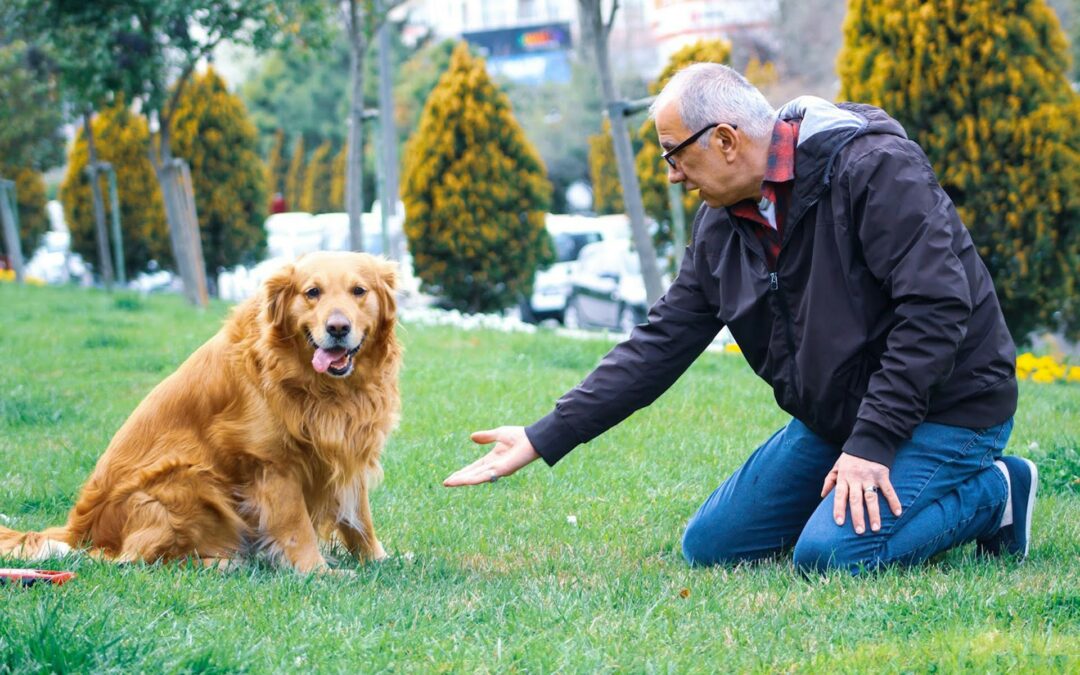
If you call your dog while leaning forward or stepping toward them, they interpret that as “stay away.”
To invite them, turn your body slightly sideways, relax, or even crouch down — that means “come closer.”
❌ 4. Empty or overused commands
If you yell “no!” a dozen times a day for different things, the word loses meaning.
Your dog doesn’t learn what not to do — they just hear random noise.

Building a Clear System of Communication
Clear communication starts with simplicity and consistency.
Use short, distinct words, pair them with a calm tone and clear gesture, and reward your dog immediately when they respond correctly.
That immediate connection between cue, action, and reward builds understanding and trust.
If your dog doesn’t respond, don’t repeat the cue five times.
Pause, check if they heard you, simplify the situation, and try again.
Repeating “sit, sit, sit!” doesn’t make it clearer — it only creates background noise.
Patience is part of communication.
After giving a cue, allow your dog a few seconds to process and respond.
Rushing or nagging doesn’t speed up learning — it weakens trust.
Real-Life Example: When a Dog Doesn’t Come When Called
Picture this: you’re on a walk, your dog is sniffing the grass.
You call, “Come here!”
They glance at you, then go back to sniffing.
You try again, “Come on!” and step toward them.
They stop, tail low, unsure what to do.
From your perspective, they’re ignoring you.
From theirs, your signals don’t match.
Your tone changed, your body moved forward (which in dog language means “stay back”), and the words kept shifting.
Now imagine the right approach.
You say once, calmly and confidently: “Come.”
You stay still, turn your body slightly sideways, maybe bend your knees a bit to seem inviting.
Your dog hesitates for a moment, then starts moving toward you.
When they reach you, you smile, praise warmly — “Good job, yes!” — and reward them.
That moment teaches your dog everything they need to know:
your word has a consistent meaning, your tone confirms it, your body supports it — and coming to you always feels safe and rewarding.
Next time, they’ll respond faster — not out of fear, but because they truly understand you.
The Power of Body Language and Tone
Your words matter less than you think.
Your body and tone speak louder.
Every gesture, breath, and movement sends a message.
If your posture is stiff, your voice sharp, and your steps fast, your dog senses tension.
If you are calm, relaxed, and speak softly, they relax with you.
When you want your dog to approach, use open body language — lean back slightly, turn sideways, lower yourself a bit.
That says: “It’s safe to come closer.”
When you need them to pause or stop, stand tall, keep still, and hold eye contact briefly — that says: “Wait.”
Your voice and body must always align.
A calm, steady tone carries more authority than shouting ever could.
Dogs don’t respond to volume — they respond to energy.
A relaxed tone tells your dog that you’re in control and there’s no reason to worry.
When your body, tone, and words speak the same language, something beautiful happens: your dog begins to understand you without confusion.
That’s real communication — the kind that doesn’t rely on force, but on connection.
Consistency Among Family Members
Clear communication doesn’t work if only one person uses it.
If everyone in the household has different words, tones, or rules, your dog can’t keep up.
One person’s “off” might mean “get down,” another’s “no” might mean “stop jumping.”
To your dog, that’s chaos.
Agree on a shared set of words, tones, and basic rules for everyone who interacts with your dog — family, visitors, even pet sitters.
Write them down if needed.
Consistency among humans creates clarity for the dog — and clarity builds confidence.
Why Clear Communication Builds Confidence and Trust
A dog who understands their human feels secure.
They know what’s expected, which lowers stress and encourages cooperation.
Each time they succeed at following a cue, their confidence grows — and so does your bond.
Confused dogs aren’t defiant — they’re overwhelmed by mixed messages.
Clear, calm communication cuts through the noise and helps them feel safe again.
When communication is clear, your dog stops worrying about “getting it wrong.”
They start trusting that you’ll guide them gently.
That’s when real learning — and a real partnership — begins.
Final Thoughts
Clear communication in dog training is more than giving commands.
It’s a mindset — a commitment to speak your dog’s language.
Dogs don’t come pre-programmed to understand us; they learn through consistent, calm patterns that make sense in their world.
When your voice, posture, and actions all tell the same story, your dog truly listens — not because they have to, but because they want to.
Clear communication isn’t about control.
It’s about connection.
And in a world where humans and dogs speak such different languages, clarity is the bridge that brings them together.
🔗 Related Articles
