Oct 9, 2025 | Training
Fundamental rule #2 in Dog training: Patience – the key to understanding learning
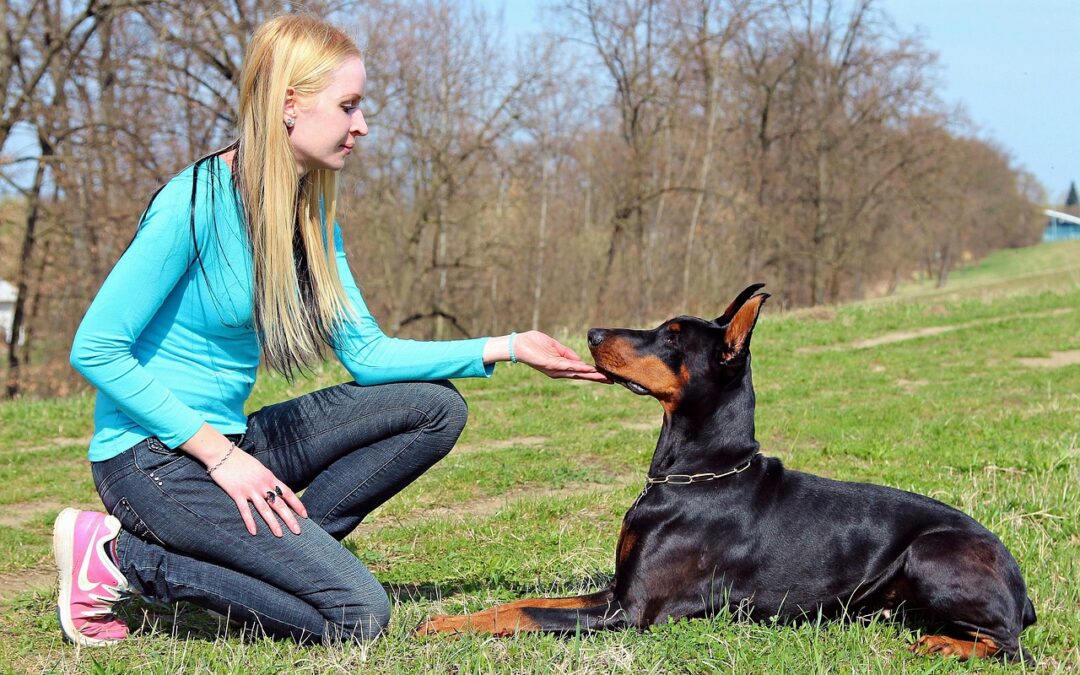
Why patience is essential in dog training
If consistency gives your dog structure and safety, patience is what builds understanding and connection.
Every behavior you want to teach your dog takes time, repetition, and clarity.
Dogs don’t learn through logic; they learn through experiences, associations, and the way we respond to them.
To learn effectively, they need time to process information and the freedom to make mistakes along the way.
Being patient means understanding that your dog isn’t a machine.
They have their own pace, history, and emotional world.
Just as a person can’t learn a new language overnight, a dog can’t master calm behavior, recall, or leash manners after only a few tries.
Without patience, learning turns into frustration—for both dog and human.
What patience looks like in practice
Patience doesn’t mean doing nothing and just waiting for your dog to “get it.”
It means actively observing, adjusting, and helping your dog understand what you’re asking for.
When your dog doesn’t respond to a cue, it doesn’t mean they’re stubborn or defiant.
It usually means they haven’t yet made the connection between the word, the action, and the reward.
Maybe the environment is too distracting. Maybe your timing is off. Maybe they’re simply tired.
Being patient means slowing down and breaking the exercise into smaller, clearer steps.
It’s about showing your dog that mistakes are not dangerous — they’re part of the learning process.
Through patience, you create an emotional space where your dog feels safe to try, fail, and try again.
Why dogs don’t “get it” right away
Dogs perceive the world differently from humans.
They don’t interpret our intentions — they respond to what they experience.
It takes time for them to connect a cue with a behavior and understand what brings positive outcomes.
Each repetition builds not only memory, but also emotional association.
If your tone is calm and your reactions are predictable, your dog will learn faster.
If your responses vary — excited one day, frustrated the next — learning slows down.
Behavioral experts note that a dog often needs 30 to 50 consistent repetitions before a behavior becomes reliable in different environments.
That’s why patience isn’t just a virtue — it’s a fundamental part of effective dog training.

How patience strengthens the bond
When you approach training with patience, your dog feels safe.
They know that trying, even when they make mistakes, won’t lead to punishment.
This emotional safety builds confidence and willingness to learn.
Learning becomes enjoyable instead of stressful.
A dog that feels understood is more attentive, calmer, and far more motivated to cooperate.
That’s because dogs connect learning with emotion — and positive emotion strengthens memory.
So every time you slow down, take a breath, and give your dog a chance to figure things out, you’re not just teaching a skill.
You’re strengthening trust — the invisible thread that holds your relationship together.
Mistakes are part of the process
Every dog makes mistakes. Even the best-trained ones.
What matters is how you respond to them.
If you treat mistakes as an opportunity to teach instead of a reason to get frustrated, your dog will stay engaged and open to learning.
When a dog “forgets” something, they’re not being difficult — they simply need a reminder, not a reprimand.
Repetition is the foundation of reliability.
Just as humans need time to solidify new knowledge, dogs need patient guidance to form consistent behavior.
Training isn’t a race.
It’s a process of understanding that grows through patience, clarity, and positive reinforcement.
How patience prevents stress and behavior problems
Dogs that are rushed or pressured to “perform” often develop stress-related behaviors: barking, whining, avoiding, or even snapping.
These are not signs of dominance or defiance — they’re signs of confusion or emotional overload.
When you bring calm, patient energy into training, you lower your dog’s stress levels.
This opens the door to real learning, because a relaxed brain can absorb information.
With patience, training becomes more effective, and your relationship becomes more harmonious.
Patience teaches your dog that learning is safe — and safety is what allows growth.
Final thoughts
Patience is not just a nice quality; it’s an essential mindset for anyone who shares life with a dog.
It tells your dog: “You have time. You’re allowed to make mistakes. I’ll guide you until you understand.”
When you train with patience, your dog learns more than just commands.
They learn that you are a calm, reliable leader who listens and gives them space to think.
That’s how training transforms from obedience to communication — from repetition to relationship.
True learning doesn’t happen through pressure.
It happens when patience and understanding turn every lesson into trust.
🔗 Related articles

Oct 9, 2025 | Training
Fundamental Rule #1 in Dog Training: Consistency – The Foundation of a Healthy Relationship
(Main image: a calm owner walking their dog in harmony, both relaxed and focused on each other)
Alt: Consistency in dog training – the foundation of trust and stability between dog and owner
Why consistency is the foundation of successful dog training
Consistency in dog training is one of the most important principles that shape how a dog understands the world, the rules, and the human they live with. Without consistency, all other aspects of training – patience, clear communication, motivation, and emotional connection – lose much of their effectiveness.
Training a dog is not just about repeating commands or practicing obedience. It’s about creating a stable, structured environment where the dog understands what is expected, where the boundaries are, and how to respond in different situations.
This structure gives the dog a sense of safety and predictability. When the messages are always the same, the dog learns what leads to praise and what defines a limit. That is the foundation of calm, balanced behavior and reliable cooperation.
What consistency looks like in practice
Being consistent means that your dog receives clear, repeated, and logical messages about which behaviors are encouraged and which are not.
This applies to every part of the dog’s life — from feeding routines and walk times, to how you react to barking, begging, entering rooms, or greeting guests.
If the rules are one way today and another tomorrow, the dog cannot form a clear picture of what’s expected.
For a dog, the world works through cause and effect — what works today, they will try again tomorrow.
If something is allowed once and forbidden the next time, the dog won’t learn boundaries — they’ll learn unpredictability.
This inconsistency creates confusion, tension, and often leads to behavioral problems like overexcitement, pulling on the leash, or ignoring commands.
Why dogs need clear and stable rules
A dog doesn’t understand the concept of “sometimes.”
For them, a rule either applies — or it doesn’t.
If your dog is allowed on the couch today but not tomorrow because you’re wearing clean clothes, that inconsistency sends mixed signals.
The dog doesn’t understand that today is a “special occasion” — they just understand that the couch is sometimes available. So they’ll keep testing if today is one of those days.
Instead of alternating between “yes” and “no,” it’s much more effective to set a permanent rule.
If you want your dog to sometimes join you on the couch, introduce a cue like “up” or “come.”
This teaches the dog that access to the couch is not automatic — it’s an invitation.
In this way, rules remain clear, while the emotional bond stays warm and cooperative.

The role of environment and daily routine
Consistency isn’t just about individual moments — it’s about the entire rhythm of your dog’s life.
A predictable routine gives dogs a sense of security.
When walks happen at similar times each day, when you use the same words for the same cues, and when meals follow a stable pattern, the dog quickly understands your rhythm and relaxes into it.
It’s equally important to react the same way to unwanted behaviors every time.
If you ignore begging at the table most of the time, but occasionally give a bite “because they were good,” you’ve just rewarded the behavior.
For your dog, that isn’t an exception — it’s proof that begging works.
And that’s the true power of consistency: behavior that never succeeds will eventually disappear.
The importance of family-wide consistency
One of the most common mistakes in multi-person households is inconsistency among family members.
If one person allows the dog into the bedroom while another forbids it, the dog won’t know which rule applies.
This isn’t a matter of opinion for the dog — it’s a contradiction that causes confusion.
That’s why it’s essential that everyone involved with the dog agrees on the basic rules:
– What’s allowed and what’s not.
– Which cues or words to use.
– How to respond to unwanted behavior.
It’s a good idea to write these rules down — not as a punishment or control tool, but as a guide for unified communication.
When everyone acts consistently, the dog receives one clear message instead of many conflicting ones.
One dog, one set of rules, one calm home.
How consistency reduces stress and builds confidence
Dogs don’t understand abstract reasoning or human logic — they learn from experience, through repetition and consequence.
When their environment keeps changing, they can’t predict outcomes, and that unpredictability increases anxiety.
Consistency in dog training directly affects a dog’s emotional well-being.
Behavioral experts confirm that dogs living in predictable environments show fewer signs of stress, react less impulsively, and progress faster in training.
When a dog knows what’s expected, they can focus on cooperation rather than uncertainty.
Predictability equals safety — and safety builds trust.
Trust is what transforms simple obedience into true partnership between dog and human.
Consistency as the basis for mutual respect
Consistency doesn’t mean being strict or cold.
It means being clear, calm, and reliable.
When your dog knows that you are always fair and predictable, they feel safe within your leadership.
That sense of safety allows learning to happen naturally.
Consistency is not about control — it’s about creating a space where your dog can grow without fear or confusion.
It’s the foundation of a respectful relationship where both sides understand and trust each other.
A dog will always act according to what their environment teaches them.
If the environment is consistent, the dog will be consistent too — and that’s the secret to peaceful coexistence.
🔗 Related articles
Oct 8, 2025 | Training
5 Fundamental Rules for Successful Dog Training
Introduction
Dog training doesn’t just happen on its own. It’s a conscious, consistent process built on understanding, trust, and respect.
In this article, you’ll discover the 5 fundamental rules for successful dog training that will help you build a stable, joyful, and trusting relationship with your dog.
Everything your dog knows—or doesn’t know—is a reflection of your relationship together.
That’s why successful training isn’t about strict commands, but about clarity, patience, and consistency in everyday life.
1️⃣ Consistency – the foundation of successful dog training
If your dog is not allowed on the couch one day, but you let them the next, they’ll get confused. Dogs don’t need harsh discipline; they need stability.
They must receive the same response to the same behavior every time.
Consistency doesn’t mean rigidity—it means reliability. When your dog learns that your rules are clear and predictable, it builds trust.
And without trust, there is no real training.
👉 Read more: Consistency in Dog Training
2️⃣ Patience – understanding that learning takes time
Dogs don’t learn overnight. Their understanding of the world develops gradually—but solidly—if we give them time.
Patience means not giving up when things don’t go as planned. It’s about seeing every small step as progress.
Moreover, a calm approach helps your dog relax and learn faster.
So celebrate every small success, because those moments build long-term trust and confidence.
👉 Read more: How to Stay Patient When Training Your Dog
3️⃣ Clear Communication – less is more
Your dog doesn’t understand your words, but they clearly sense your tone, body language, and emotions.
If you say “sit” once, “get down” another time, and “come on, sit down already” the third, your dog won’t know what you mean.
When teaching, less is more. Short, clear, and consistent cues help your dog understand what’s expected.
The clearer you are, the calmer and more confident your dog becomes.
👉 Read more: Clear Communication Between Human and Dog
4️⃣ Motivation – the driving force of learning
No one does something for nothing—not even your dog.
If working with you doesn’t bring any reward, they’ll simply follow their own interests.
Motivation is not bribery; it’s understanding what your dog values most—food, play, freedom, or your attention—and using it as fuel for learning.
When you discover what truly motivates your dog, training becomes enjoyable for both of you.
👉 Read more: What Truly Motivates Your Dog
5️⃣ Emotional Connection – building trust and safety
(Image: dog and owner hugging)
Alt: Emotional connection with your dog – building trust and security
Training without emotional connection is just command repetition.
But training built on connection is cooperation.
A connected dog will turn to you even when scared or stressed—because they trust you.
Your presence gives them safety and stability. Those moments of closeness are the real foundation of a lifelong bond.
👉 Read more: How to Build a Strong Emotional Connection With Your Dog
Why these 5 fundamental rules for successful dog training matter
These principles aren’t random—they’re based on behavioral science, canine psychology, and years of real-life experience.
They don’t describe what your dog must do, but who you need to become so your dog can learn, trust, and thrive.
Whether you’re a first-time dog owner or want to deepen your understanding of canine behavior, these five rules will guide you toward positive, fear-free training.
👉 Also read: How to Prepare Your Home for a Dog
💡 Reflection tip:
Next time your dog doesn’t cooperate, ask yourself:
Was I consistent today? Patient? Did I communicate clearly? Did I motivate my dog? Did I provide safety and belonging?
If not—that’s your starting point.

Mar 12, 2025 | Training
Kako vzgojiti ubogljivega in srečnega psa
Faze šolanja psa je dobro poznati, saj jih moramo upoštevati pri vzgoji psa, sicer lahko psa premalo ali preveč obremenimo. Faze v procesu šolanja psa morajo biti ustrezno opredeljene, saj psi v različnih obdobjih odraščanja različno dojemajo nas in naše zahteve. Primerna vzgoja pa kot vemo ustvari močne vezi med psom in vodnikom. Pravilno šolan pes ne le bolje razume, kaj se od njega pričakuje, ampak tudi lažje sobiva s svojim lastnikom in okolico.
Vsak pes potrebuje strukturirano učenje, ki ga lahko razdelimo na štiri glavne faze šolanja. Te faze pokrivajo vse od zgodnje socializacije do ohranjanja pridobljenega znanja.
Če sledite tem fazam in jim posvetite dovolj časa, boste vzgojili mirnega, samozavestnega in srečnega psa, ki bo užival v življenju ob vaši strani.
1. faza: socializacija – temelj vsake vzgoje
Starost psa: 3 tedne – 16 tednov
Trajanje: Prvih nekaj mesecev, nato pa skozi celo življenje
Cilj: Psa navaditi na različne ljudi, okolja, zvoke in situacije, da ostane samozavesten in miren.
Socializacija se začne že pri vzreditelju, prve pomembne izkušnje pa pridobi mladiček v prvih 16 tednih življenja. To je ključno obdobje, ko je pes najbolj dojemljiv za učenje in nove izkušnje.
Kaj vključuje socializacija?
Spoznavanje različnih ljudi (otroci, starejši, ljudje s klobuki, kolesarji itd.).
Srečanja z drugimi psi in živalmi v nadzorovanih okoliščinah.
Navajanje na različne zvoke (avtomobili, sesalnik, zvonci, ognjemeti – postopoma in brez prisile).
Sprehod po različnih površinah (trava, pesek, les, ploščice, rešetke).
Kratka ločitev od lastnika (da preprečimo ločitveno tesnobo).
Primer vaje:
- 8-12 tednov: Peljite mladička v park, kjer bo iz varne razdalje opazoval druge pse in ljudi. Ko ostane miren, ga nagradite.
- 12-16 tednov: Postopoma omogočite več interakcij z drugimi psi, a vedno v nadzorovanem okolju.
Napaka, ki se ji morate izogniti:
Ne silite psa v interakcije, če se boji. Pustite mu čas, da se prilagodi in vedno uporabljajte pozitivno motivacijo.
Več o socializaciji psa si preberite na tej povezavi.
2. faza: učenje osnovne poslušnosti
Starost psa: 8 tednov – 6 mesecev
Trajanje: Prvih nekaj mesecev, nato postopno nadgrajevanje
Cilj: Pes se nauči osnovnih ukazov in osnov bontona za življenje v družbi.
Ko je pes socializiran, se začne temeljno učenje poslušnosti. To je obdobje, ko psa učimo osnovnih ukazov, ki jih bo uporabljal vsak dan.
Osnovni ukazi:
Sedi – pes se umiri in osredotoči na vas.
Prostor (ali Dol) – pes se nauči sprostitve in samokontrole.
Pridi (Odpoklic) – zagotavlja, da se pes varno vrne k vam.
Poleg – hoja na povodcu brez vlečenja.
Čakaj – pes se nauči potrpežljivosti.
Primer vaje:
- 10-12 tednov: Začnite z ukazom sedi – vsakič, ko pes spontano sede, ga pohvalite in nagradite.
- 3-4 meseci: Vadite pridi na varnem mestu brez motečih dejavnikov – najprej na povodcu s krajših razdalj, nato na večje razdalje.
Napaka, ki se ji morate izogniti:
Ukaze vadite v kratkih, a pogostih intervalih. Mladički imajo kratko pozornost, zato je bolj učinkovito več krajših treningov na dan kot en dolg.
3. faza: napredno šolanje in razvoj pasjih sposobnosti
Starost psa: 6 mesecev – 1 leto
Trajanje: Odvisno od psa, lahko traja več mesecev ali celo življenje

Cilj: Psu ponuditi nove izzive in ohranjati njegovo miselno aktivnost.
Ko pes obvlada osnovne ukaze, je čas za naprednejše treninge, ki ga mentalno in fizično zaposlijo.
Kaj vključuje napredno šolanje?
Učenje trikov (daj tačko, zavrti se, plazi se).
Iskanje predmetov po vonju (odlična aktivnost za pse z močnim vohom).
Agility (premagovanje ovir, tuneli, skoki).
Sledenje in reševanje (za pasme, ki uživajo v delu).
Primer vaje:
- 6-9 mesecev: Naučite psa, kako prenesti predmet k vam (prinesi).
- 9-12 mesecev: Začnite s preprostimi agility ovirami in nadgradite zahtevnost.
Napaka, ki se ji morate izogniti:
Prehitro napredovanje brez utrjevanja znanja. Vsak nov ukaz mora biti dobro utrjen, preden nadaljujete na bolj zahtevne vaje.
4. faza: vzdrževanje znanja in ponavljanje
Starost psa: 1 leto in več
Trajanje: Vse življenje
Cilj: Ohraniti pridobljeno znanje in zagotavljati redno mentalno stimulacijo.
Ko pes obvlada osnovne in napredne ukaze, je pomembno redno ponavljanje, da ne pozabi naučenega.
Kaj vključuje vzdrževanje znanja?
Redno ponavljanje naučenih ukazov.
Dodajanje novih izzivov in različic vaj.
Ohranjanje miselne stimulacije (npr. igrače za reševanje problemov).
Primer vaje:
- 1 leto +: Vadite poslušnost v različnih okoljih (doma, na ulici, v pasjem parku).
- Redno ponavljanje: Če pes nekaj časa ne izvaja določenega ukaza, ga ponovno vadite z nagrajevanjem.
Napaka, ki se ji morate izogniti:
Ne predvidevajte, da bo pes vedno znal ukaz, če ga ne vadite redno. Učenje je vseživljenjski proces!
Več o učenju osnovnih ukazov si boste kmalu lahko prebrali v naši učilnici.
Zaključek: ključ do uspešne vzgoje psa
Šolanje psa je postopen in premišljen proces, ki zahteva doslednost in potrpežljivost. Če upoštevate vse štiri faze – socializacijo, učenje osnovnih ukazov, napredno šolanje in vzdrževanje znanja – boste vzgojili psa, ki je srečen, samozavesten in dobro prilagojen na življenje z ljudmi, predvsem pa mu boste lahko zaupali tudi v neželjenih situacijah.
Mar 12, 2025 | Training
Dog socialization – what it is, why it’s important, and how to do it properly
What is dog socialization?
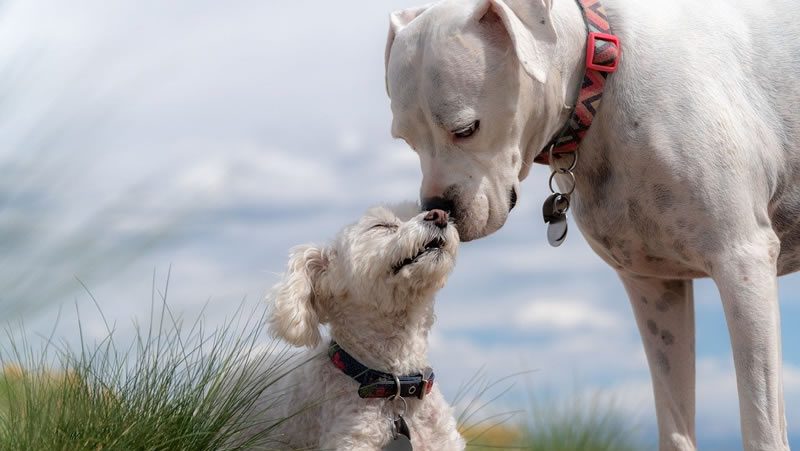
Dog socialization is a gradual process in which a dog learns how to behave in different situations, becomes familiar with various environments, and adapts to our world in a way they understand. The primary goal of socialization is to ensure that the dog feels safe and confident in all circumstances.
When done correctly, socialization prevents dogs from developing fear of sudden noises, crowds, or unfamiliar animals. It also helps them remain calm in the presence of traffic, children, or new experiences they will encounter in daily life.
Since early experiences significantly shape a dog’s future behavior, socialization should begin as early as possible in puppyhood.
Why is dog socialization so important?
Socialization is one of the most essential aspects of dog training. If a dog is not properly socialized, they may develop behavioral issues such as fear, aggression, or insecurity.
✔️ A well-socialized dog will:
- Be confident and relaxed in different environments.
- Interact with people and other dogs without stress.
- Be less prone to developing phobias and anxiety.
- Adapt easily to changes in their surroundings.
❌ A poorly socialized dog may:
- Develop fear of unfamiliar situations.
- Become overly cautious and distrustful.
- Show aggression due to insecurity.
- Exhibit destructive behavior in stressful environments.
While it is possible to retrain an unsocialized dog, the process is long and challenging. Early socialization is the key to preventing these issues.
Dog socialization timeline
To make socialization as effective as possible, it should be adjusted to the dog’s age. Each stage presents unique challenges and opportunities.
3 - 8 weeks (early socialization at the breeder)
- Puppies begin exploring their world, interacting with their mother and littermates.
- The breeder introduces them to human touch and different stimuli.
- Positive experiences during this phase are crucial for their development.
8 - 16 weeks (critical socialization period)
- Puppies are at their most receptive stage for learning and exploring.
- They should be introduced to different people, animals, and environments.
- Exposure to loud noises, vehicles, crowds, and veterinary visits is a key part of the process.

4 - 6 months (transitional period)
- Puppies may start becoming more cautious or reserved.
- It is essential to continue gradual and positive exposure to new situations.
6 - 12 months (adolescent phase)
- Dogs begin testing boundaries and becoming more independent.
- Consistent socialization reinforces stable and predictable behavior.
1 year and beyond (lifelong socialization)
- Although the critical period is over, socialization should continue throughout life.
- Regular experiences in new environments help dogs stay adaptable and confident.
Dog socialization is a gradual, lifelong process
Although socialization lasts a lifetime, the first few months are crucial because puppies are most receptive to new experiences and learning.
⚠️ Important note: Successful socialization requires basic knowledge of dog training. Owners should understand how to introduce new situations correctly, recognize canine reactions, and avoid reinforcing undesirable behaviors.
📚 Best approach: Future dog owners should educate themselves on dog training before bringing a puppy home. Being well-prepared makes it easier to create a safe and positive socialization experience.
How to properly socialize a dog?
Socialization should be gradual and positive. Forcing a dog into stressful situations may have the opposite effect, reinforcing fear rather than reducing it.
1. Introduce new experiences gradually
Instead of taking a dog straight into a crowded city, start with a quiet street. Reward calm behavior with treats and praise. Once the dog is comfortable, gradually introduce them to busier places, such as parks or pet-friendly cafés.
2. Use positive reinforcement
Dogs should associate new experiences with pleasant feelings. Offering treats, playtime, or verbal praise helps them perceive new environments as safe and enjoyable.
3. Encourage interaction with different people and animals
Dogs should meet children, adults, cyclists, joggers, and other animals. This helps them develop appropriate communication skills and confidence.
4. Familiarize the dog with different sounds and surfaces
Vacuum cleaners, traffic noise, slippery floors, and sand are all part of everyday life. Gradually introducing these elements ensures that the dog accepts them as normal.
5. Teach independence
Socialization is not just about exposure to new experiences. Dogs must also learn to be comfortable when left alone. Start with short absences and gradually increase the duration to prevent separation anxiety and destructive behavior.
Common mistakes in dog socialization
If done incorrectly, socialization can become a negative experience. Here are some of the most common mistakes:
❌ Overwhelming the dog with too many new experiences at once → Can lead to fear and insecurity.
❌ Forcing the dog into uncomfortable situations → Reinforces anxiety rather than resolving it.
❌ Allowing interactions with aggressive or poorly behaved dogs → May result in learned undesirable behaviors.
❌ Lack of early socialization → An adult dog will struggle to adapt to new situations.
🚀 Best solution: A gradual, positive, and consistent approach!
Conclusion: socialization is the key to a well-balanced dog
Socialization is one of the most important things an owner can do for their dog. A well-socialized dog will be confident, calm, and capable of adapting to different environments.
